Hiring a Nurse, Health Worker, or Helper? Understanding the Differences in Home Care
by YDCare Homecare Team
|
March 30,2026
When a loved one becomes unwell, an older
family member can no longer manage daily activities independently, or someone
needs extra support after hospital discharge, many families start looking for
help at home.
Common options usually include nurses,
health workers, and foreign domestic helpers. Although all three may be
involved in looking after a patient or older adult, they are not the same. The
type of care they provide, the situations they are best suited for, and the
level of support they can offer are quite different.
Choosing the wrong type of support may mean
the patient’s needs are not fully met, and in some
cases, it may place even more pressure on family members. So how do you know
which one is more suitable? This article breaks it down for you.
Nurse: For More Complex Care Needs
A nurse does more than assist with daily
care. Nurses are trained to understand a patient’s
overall condition, spot warning signs, and provide appropriate nursing care.
This is especially important when the
patient has more complex care needs, such as:
- - wound care, pressure injury care, or stoma care
- - nasogastric tube, gastrostomy tube, urinary catheter, or drain care
- - PICC, Port, or other central line care
- - monitoring of chronic illnesses such as diabetes, heart disease,
COPD, or post-stroke conditions
- - post-discharge nursing follow-up
- - injections, medication support, and treatment-related care
- - palliative care, symptom observation, and end-of-life support
The key difference is that nurses can
recognise when something may be wrong. For example, if a patient becomes
weaker, eats less, or seems more tired than usual, a nurse can assess whether
this may be related to infection, dehydration, low blood sugar, or another
health problem.
This kind of observation is very important
in home care. Early recognition of a problem may help prevent the condition
from worsening and may even reduce the chance of hospital readmission.
If the patient has medical needs, an
unstable condition, or any signs that their health may change easily, a nurse
is usually the more appropriate choice.
Health Worker: For Stable Patients Needing Daily Care Support
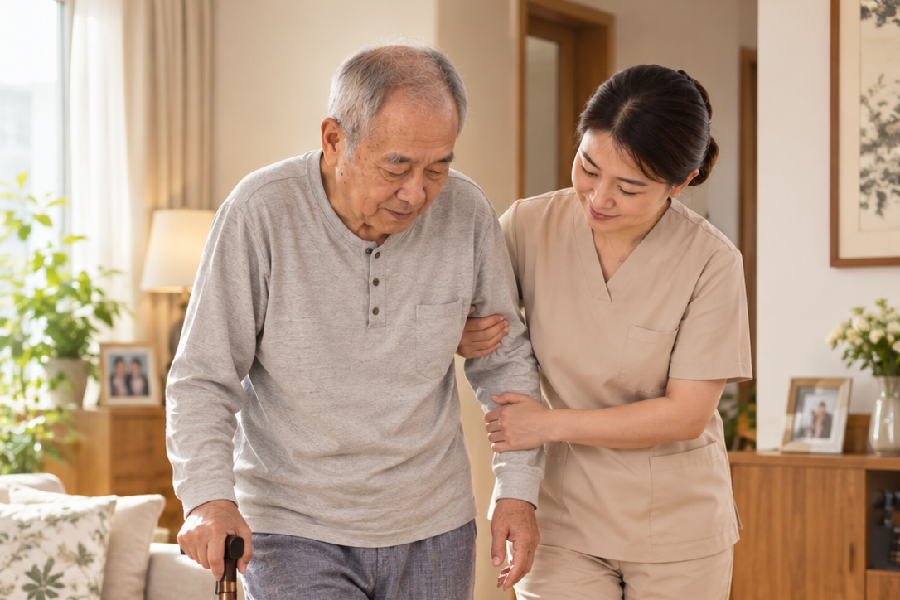
Health workers are generally trained in
basic caregiving skills and are experienced in assisting older adults or
patients with daily activities.
They often help with:
- - bathing, dressing, toileting, and diaper changing
- - repositioning, transfers, wheelchair assistance, and mobility
support
- - feeding assistance and personal care
- - observing basic day-to-day changes such as skin condition, bowel and
bladder patterns, and general wellbeing
For patients who are relatively stable but
need more help with daily living, a health worker may be a very suitable
option. This is often helpful for older adults with reduced mobility, those who
are bedridden, or families who need daytime or overnight support.
Compared with a nurse, a health worker
focuses more on practical daily care. They are very valuable when the main need
is hands-on support with routine care. However, if the patient has more complex
medical issues, nursing procedures, or recent changes in condition, then a
nurse should be involved rather than relying on a health worker alone.
If the patient is stable, a health worker
can be a very suitable option. But if there are more complex health issues or
recent changes in condition, nurse assessment should be considered.
Foreign Domestic Helper: Helpful for
Daily Support, but Not Professional Care
Foreign domestic helpers can be very helpful in
home settings. They may assist with companionship, meal preparation, household
tasks, and basic daily support. This can reduce a lot of pressure for families.
However, foreign domestic helpers are not the same
as nurses or health workers. Their training and caregiving experience can vary
greatly, and they may not be able to recognise important health changes or
manage more complex care tasks.
For example, signs such as fever, frequent
choking, swollen legs, confusion, or wound changes may suggest a medical
problem. A foreign domestic helper may not always know how serious these signs are or
what to do next.
Foreign domestic helpers can be an important part
of the care arrangement, but they should not replace professional care when the
patient has nursing or medical needs.
The Most Important Thing Is Choosing the
Right Fit
It is not about who is “better,” but who is more suitable for the
patient’s condition.
- - Nurse: suitable for patients with medical or nursing needs
- - Health Worker: suitable for stable patients who need daily care
support
- - Foreign domestic Helper: suitable for companionship and household
support, but not as a substitute for professional care
If the patient’s
condition is more complex, involves wounds, tubes, chronic disease monitoring,
or recent decline, professional nursing support should be considered early.
At YDCare, we provide support through a
team of nurses, health workers, and other care professionals. If you are
considering home care support, feel free to contact us to get a more suitable
care plan for your family.
Read more:
Hong Kong Elderly Care Guide: Comparing CCSV, Subvented Services, and Government Subsidies
Choosing Nursing Service: 5 Essential Questions to Ask