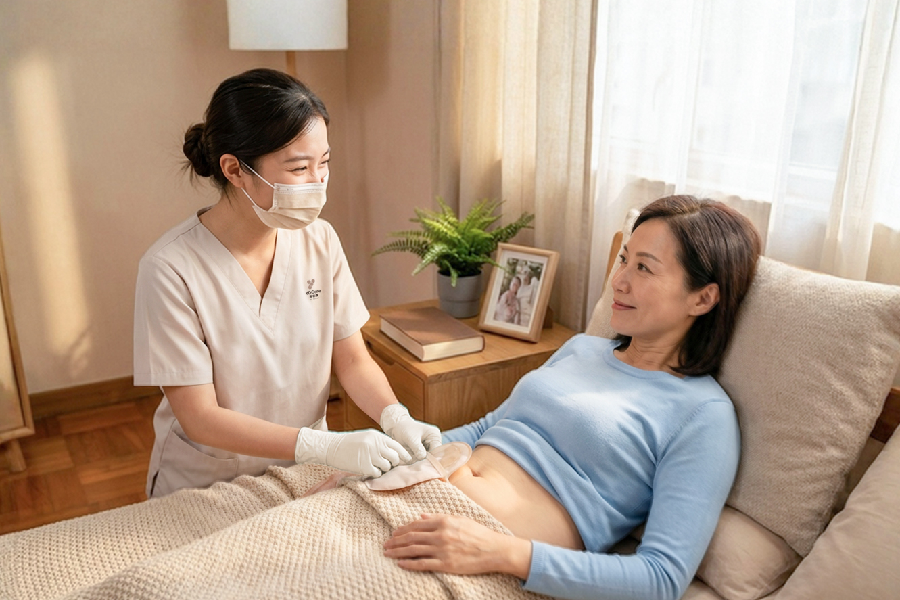
Advance Care Planning (ACP) and End of Life at Home: 2026 Hong Kong Policy & Guide
by YDCare Homecare Team
|
November 18,2025
Hong Kong has significantly enhanced its legislative framework
for end-of-life care. With the full implementation of the Advance Decision on Life-Sustaining Treatment Ordinance
in 2026, families now have a structured legal path to honor a loved one’s final
wishes with the utmost dignity.
1.
Understanding Key Concepts
· Advance Care Planning (ACP):
A continuous dialogue
between patients, families, and clinicians to record treatment preferences
based on personal values.
· Advance Decision (AD):
A legally binding
document (under the new ordinance) specifying the conditions under which a
patient refuses life-sustaining treatment if they lose decision-making
capacity.
· Do Not Attempt Cardiopulmonary Resuscitation (DNACPR):
A medical
order signed by a doctor. It applies only to CPR
(resuscitation) and does not affect pain relief, oxygen therapy, or
comfort-based care.
2.
Why Prepare Now?
Early
discussion transforms the concepts of "comfort, dignity, and home"
into actionable medical instructions. It minimizes the burden of hasty
decision-making on family members and prevents potential domestic conflicts
during an emotional time.
3.
Is "End of Life at Home" Feasible in Hong Kong?
Yes, it is
feasible and legal under the following conditions:
· Expected Natural Death: If a registered doctor
familiar with the patient's condition attends the home to certify the death, it
is treated as a natural event.
· Unexpected or Unnatural Death: If the cause is unclear,
suspicious, or accidental, the police and the Coroner’s mechanism must be
involved.
4.
Practical Roadmap for Families
1. Start the Conversation Early:
Discuss preferences
regarding intubation or life support with your GP. Ensure these goals are
documented in medical records.
2. Documentation:
Complete the non-hospital version of the DNACPR. Once the new
ordinance is in effect, utilize the statutory format for your Advance Decision
(AD). Keep these documents easily accessible.
3. Medical Deployment:
Arrange for a doctor willing to provide home
visits for end-of-life certification. Prepare necessary equipment like
pressure-relief mattresses and prescribed palliative medications.
4. At the Moment of Passing:
If the death is expected,
notify the pre-arranged doctor immediately. If it is sudden or suspicious, call
999.
5. Post-Death Formalities:
o Within 24 Hours: The doctor
must sign Form 18 (Medical Certificate of Cause of Death) and Form 2 (Medical Certificate for Cremation).
o Death Registration: Take the
certificates to the Births and Deaths Registry to obtain the "Death
Certificate" and Form 12 (Permit for Body Removal).
o Body Removal: Contact a
registered funeral director within 48 hours for transportation.
5.
FAQ for Families
· If we sign a DNACPR, will pain relief still be provided?
Absolutely. A
DNACPR only applies to resuscitation efforts. It does not affect palliative
care, such as pain management, anti-anxiety treatment, or oxygen.
· Should we call the police if a loved one passes away naturally at
home?
If a
pre-arranged doctor is available to certify the death and sign the legal
documents, calling the police is generally not required.
· What if the doctor cannot arrive immediately?
It is vital to
confirm backup arrangements in advance. If no doctor is available to certify
the cause of death, you must notify the police to initiate standard legal
procedures.
6.
How YDCare Supports You
Navigating the legal and medical steps of End of Life at Home can be overwhelming. YDCare is here
to walk with you:
· Facilitating ACP Discussions: Helping families talk
about difficult choices.
· Medical Coordination: Arranging doctors for home visits and
certifying documents.
· Home Setup: Planning for medications and equipment according to doctor’s
orders.
· Administrative Help: Assisting with death registration and
connecting with funeral services.
Let’s
turn a difficult time into a journey of peace. If you wish to learn more about
home-based palliative care, contact the YDCare Professional Team.
Know more about End-of-life Care at Home