Bilateral Heel Pressure Injuries Recovery Case: Wound Care & Debridement Treatment
by YDCare Homecare Team
|
May 22,2026
90-year-old Mr. Lee had been bedridden for
a long period due to dementia and stroke. As a result of prolonged pressure on his
bony areas and limited mobility, he developed Stage 3 pressure injuries on both
heels. The wounds kept recurring, creating significant stress and caregiving
pressure for the family.
Before contacting YDCare, the family had
already been managing the wounds for nearly a year. During that time, they
received wound care support from another nursing provider and purchased many
different types of dressings, hoping the wounds would gradually improve.
However, despite ongoing dressing changes,
the condition showed no improvement, and the family became increasingly worried
that the wounds might continue to worsen.
After reviewing Mr. Lee’s wound condition,
medical history, daily care situation, and medication list, YDCare found that
the prolonged wound healing was likely related to more than just dressing.
For many chronic pressure injuries, if
necrotic tissue is present or the wound environment has not been properly
managed, simply changing dressings may not be enough for wound healing.
Therefore, we recommended a detailed in-home assessment by our wound specialty
nurse, followed by appropriate treatment, including debridement and adjustment
of the wound care approach.
During the first home visit, our wound specialty
nurse carefully reassessed the wounds, including:
- Wound depth
- Necrotic tissue condition
- Amount of exudate
- Pressure relief measures
- Suitability of the existing dressings
Debridement treatment was then performed
accordingly. At the same time, we did not ask the family to purchase large
amounts of additional dressings. Instead, we focused only on using the products
that were truly necessary and suitable for the wound condition.
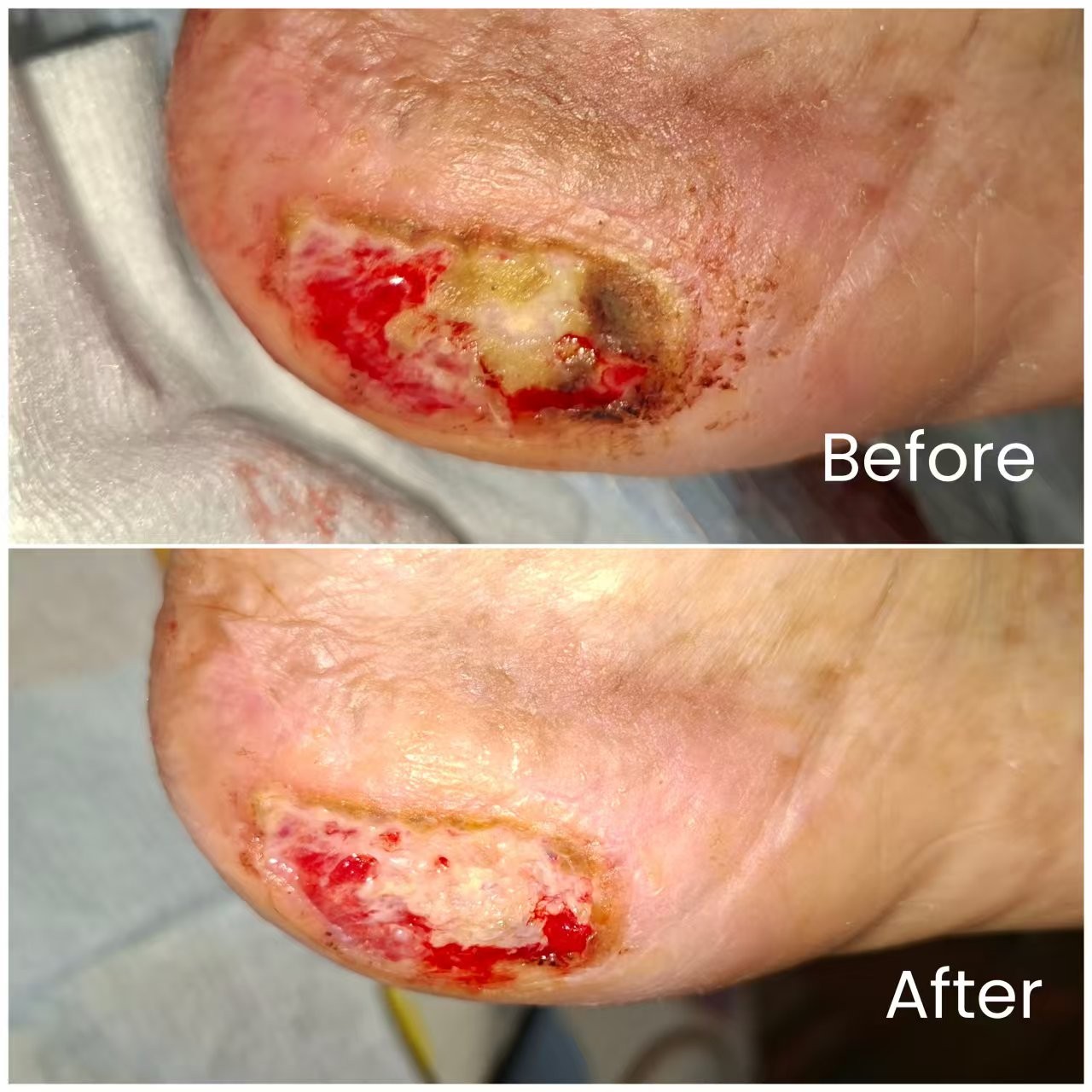
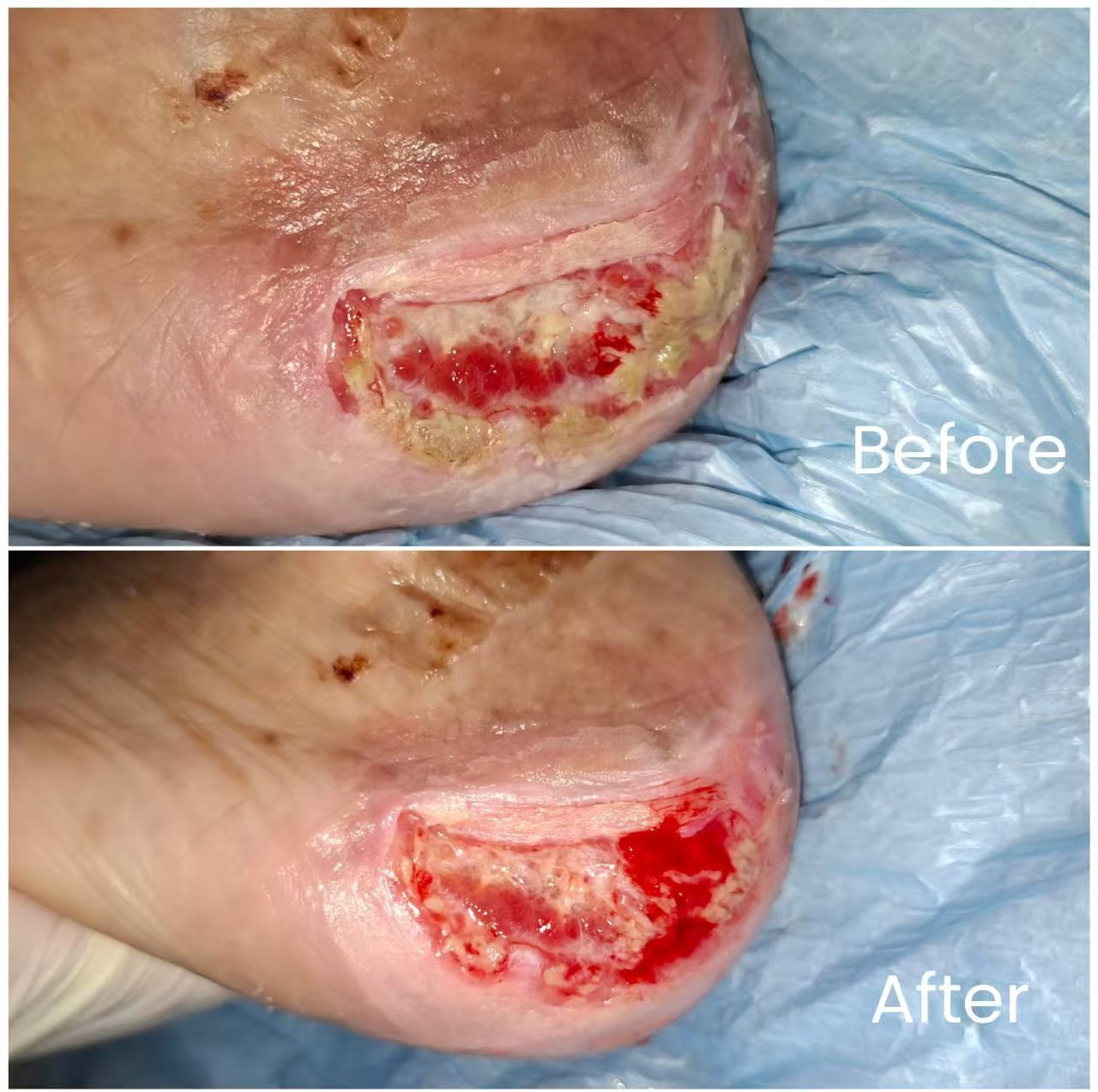
(Comparison before and after treatment
during YDCare’s first home visit)
As the family already understood basic
dressing change techniques, follow-up care mainly involved regular weekly
visits from our wound specialty nurse to monitor wound progress and adjust the
care plan when needed.
During the second follow-up visit, necrotic
tissue had gradually reduced, and the wounds had become more stable. Our wound
specialty nurse continued the debridement treatment.
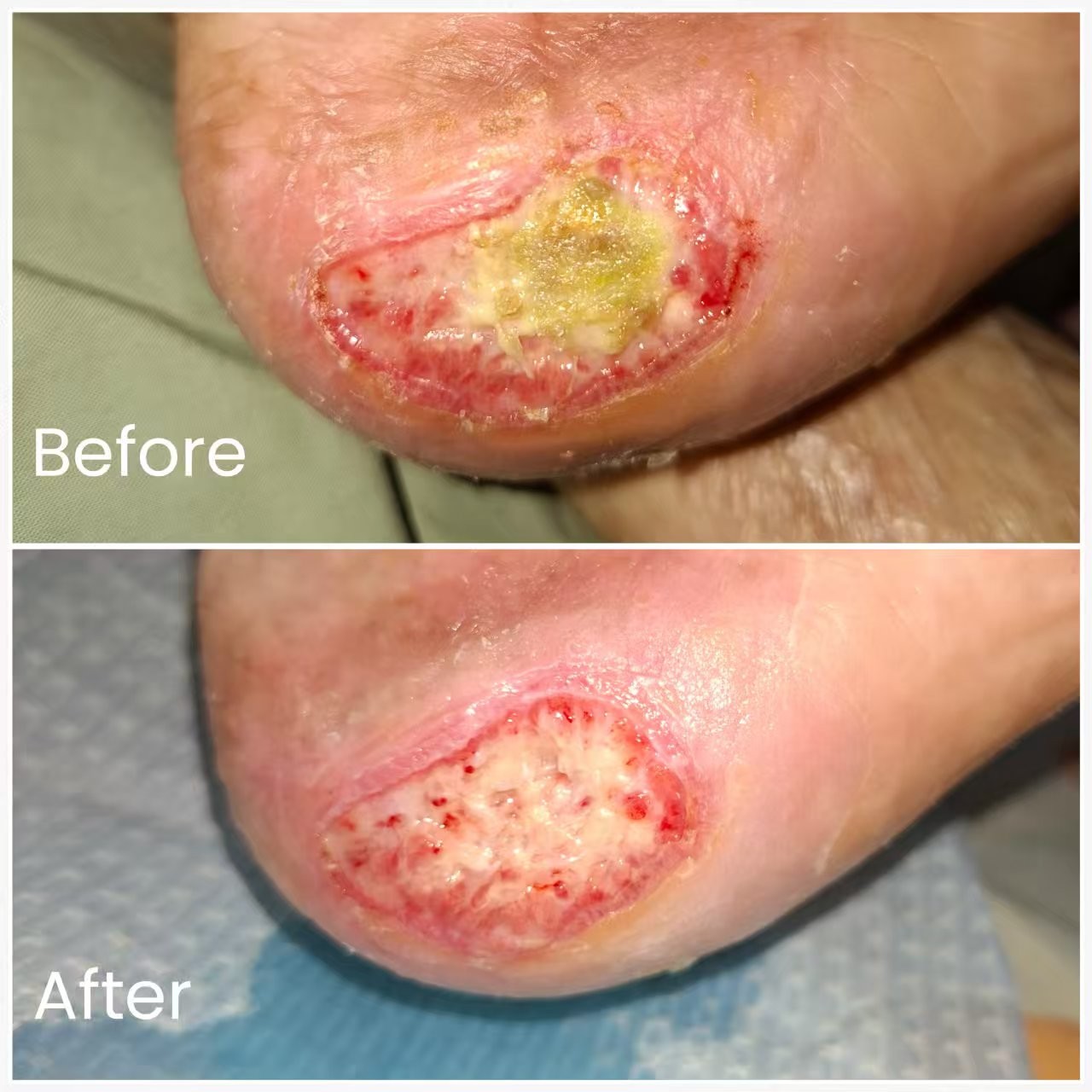
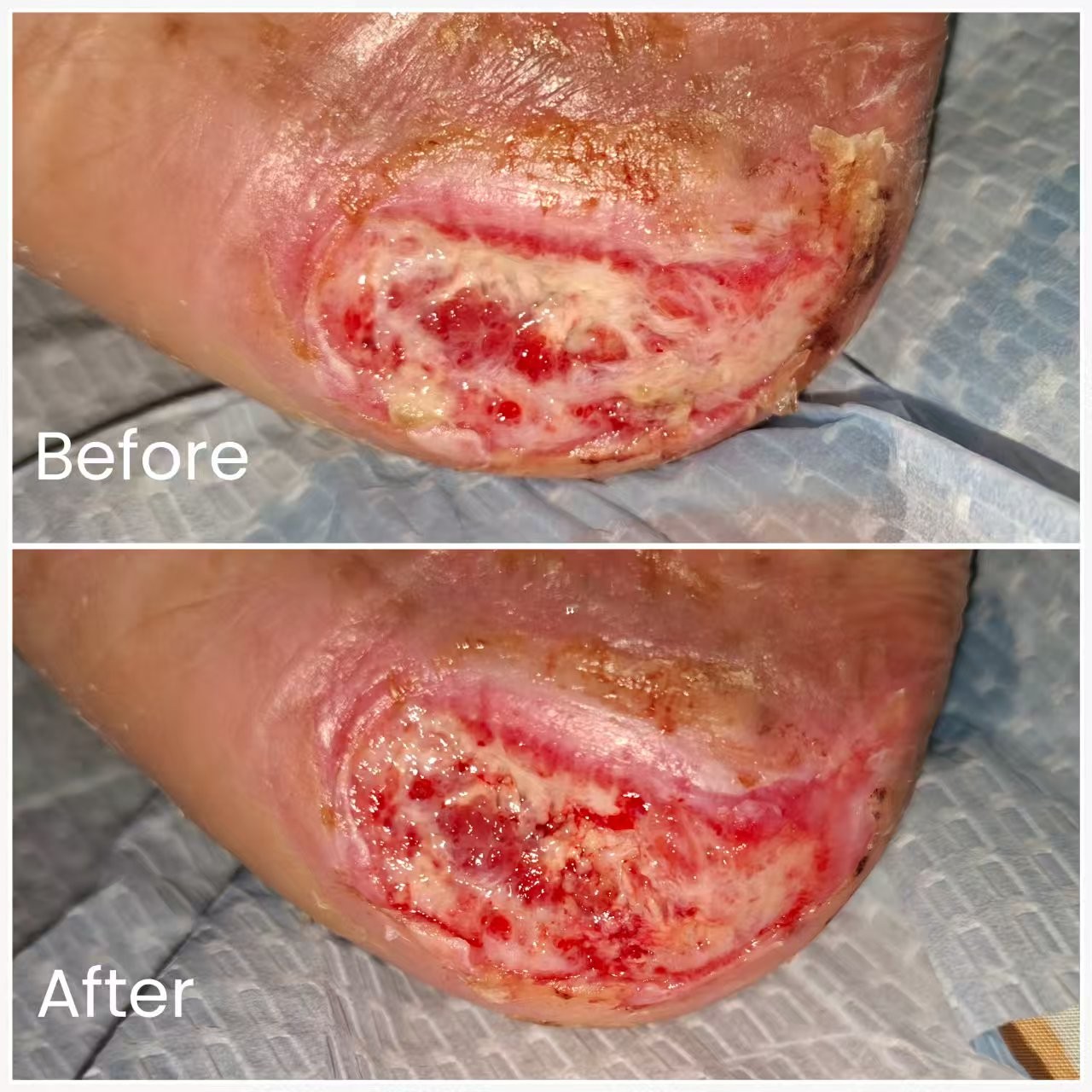
(Comparison before and after treatment
during YDCare’s second home visit)
By the middle stage of treatment, the
wounds had become noticeably shallower, and the deeper heel areas had gradually
started to close.
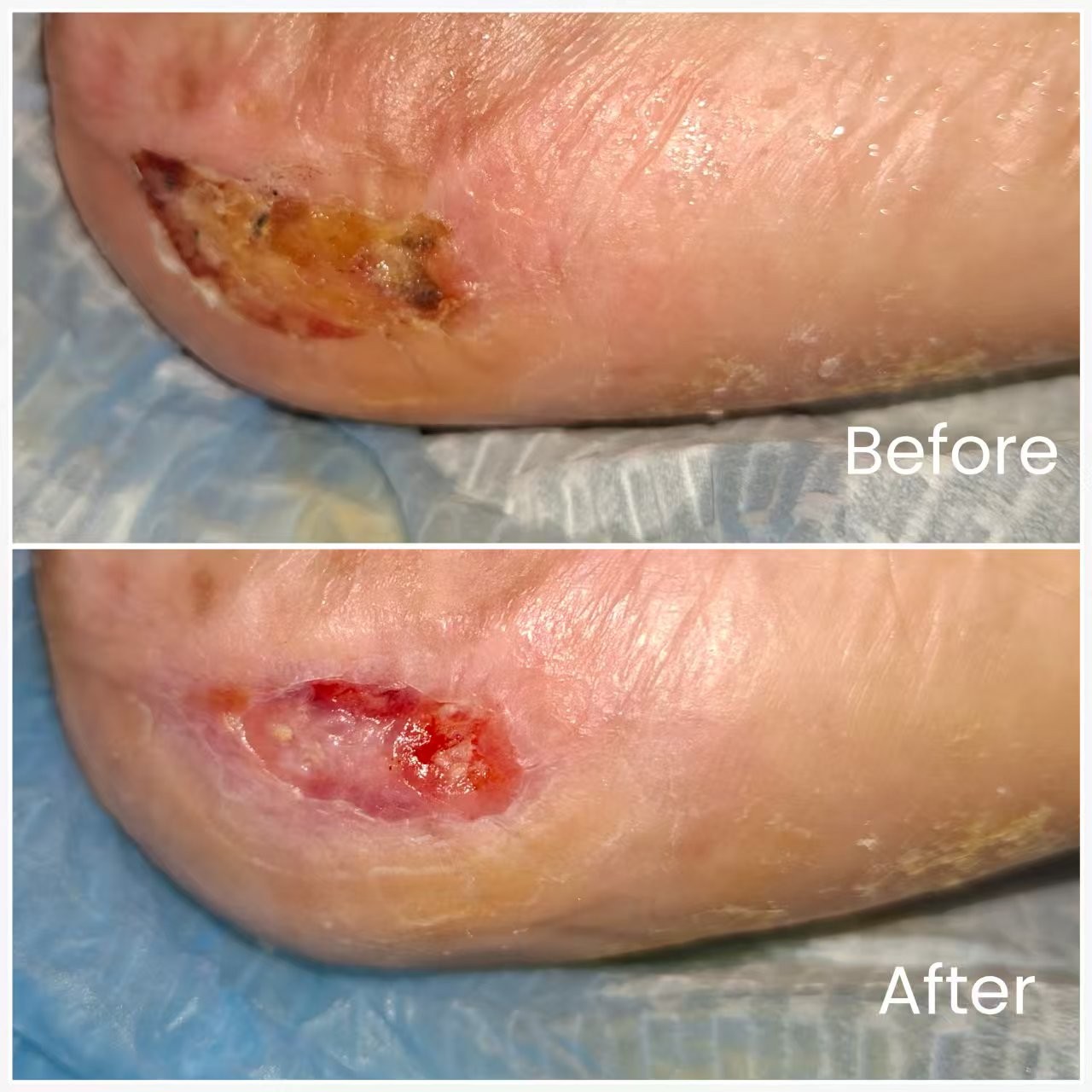
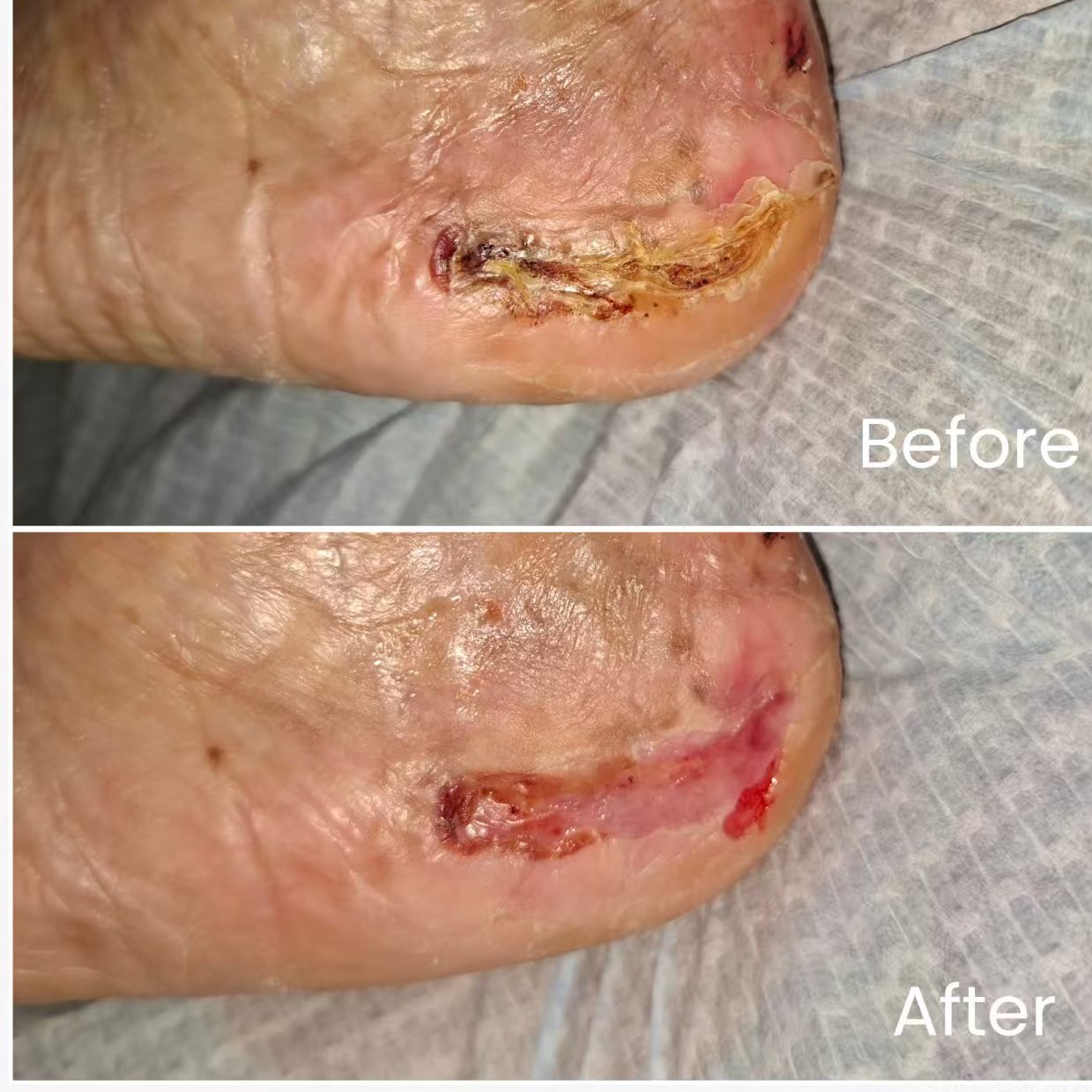
(Comparison before and after treatment by
the middle stage of treatment)
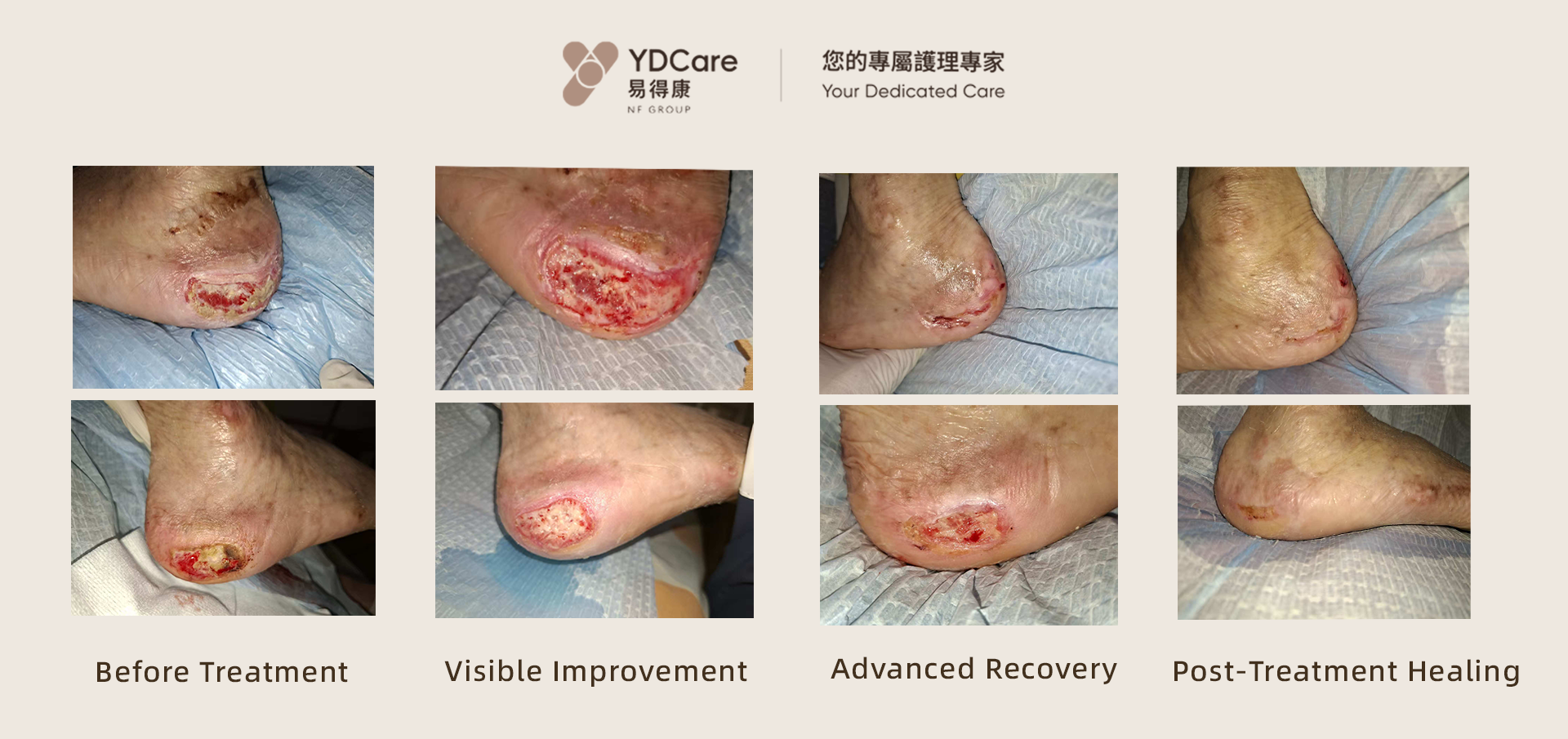
After continued wound care, regular
debridement, pressure relief management, and proper dressing use, both heel
wounds were healed after around three months.
For bedridden elderly patients, pressure
injury healing may not happen within a short period of time. However, with the
right treatment direction and consistent wound management, gradual improvement
is possible.
YDCare provides home wound care services
led by wound specialty nurses. Rather than simply performing routine dressing changes, we
tailor the treatment plan according to each patient’s
actual condition. We also aim to avoid unnecessary purchases of medical
supplies, helping families manage wound care more effectively and efficiently.
Service Highlights
- Wound assessment
- Pressure injury / wound care
- Debridement treatment
- Dressing recommendations
- Caregiver education
- Regular follow-up visits
- Chronic Pressure Injuries Often Require Reassessment
If a bedridden elderly family member has a
wound that repeatedly fails to heal, continues to deepen, or shows little
improvement despite ongoing care, it may indicate that the current wound
management approach needs reassessment.
Early intervention not only helps reduce
the risk of wound deterioration, but can also relieve discomfort for the
patient and reduce caregiving stress for the family.
For more information about home wound care, pressure injury treatment, or wound specialty service, feel free to contact the
YDCare team.
Read More:
Preventing Pressure Injuries (Bedsores): A Practical Guide for Bedridden Care
Specialist Nurse–Led Wound Care for Efficient Healing of a Stage 4 Pressure Injury