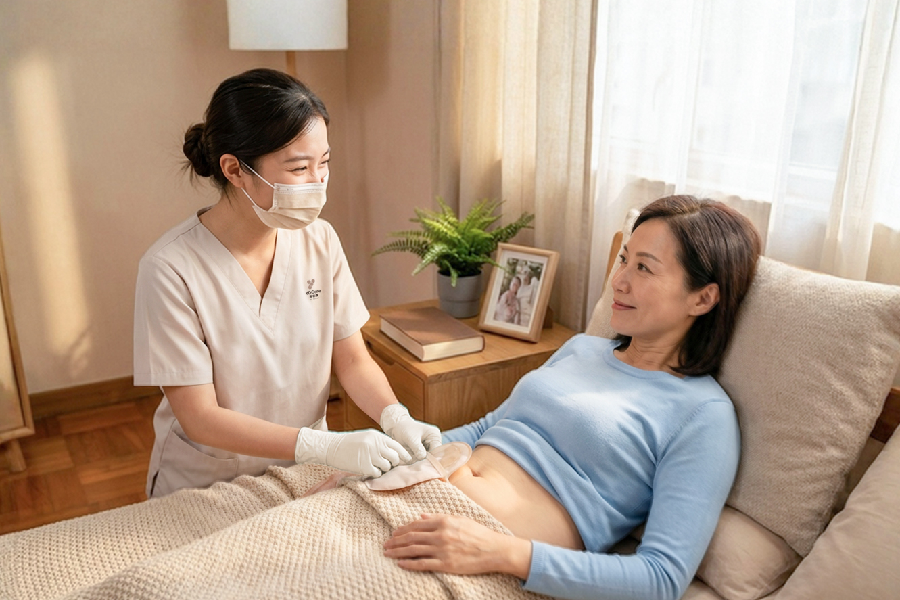
A Guide to 5 Debridement Methods and How They Heal Wounds
by YDCare Homecare Team
|
July 1,2026
Wound Debridement is a medical process of
removing non-viable tissue from a wound. As the saying goes, "A skyscraper
rises from a solid foundation." Without a firm foundation, how can a tall
building be constructed? Similarly, if a wound contains necrotic (dead) tissue
that is not properly cleared away, how can healthy tissue grow to allow the
wound to heal?
Importance and Benefits
of Debridement
Debridement is the most
critical step in wound management. Its primary benefits include:
1. Reducing the Risk of
Infection
Necrotic tissue acts as
a "breeding ground" for bacteria. Removing these tissues deprives
bacteria of a hiding place, which prevents wound infection and can even avert
life-threatening sepsis.
2. Initiating the
Healing Mechanism
Healthy tissue requires
a proper blood supply. Necrotic tissue covers the wound surface and obstructs
the growth of granulation tissue. Debridement stimulates the tissue to release
growth factors, allowing the wound to re-enter "healing mode".
3. Reducing Odor
Infected or necrotic
tissues are often accompanied by a strong, foul odor and heavy exudate (fluid
drainage). Once the dead tissue is removed, the odor subsides, significantly
improving the patient's quality of life and comfort.
4. Accurately Assessing
the Wound
When a wound is covered
by slough or black eschar (scabs), it is difficult to judge its actual depth or
determine if the tissue beneath the skin edges has been eroded. After
debridement, the true condition of the wound becomes clear immediately, which
helps in formulating the correct treatment plan.
Common Methods of
Debridement
Debridement does not
always require a "scalpel." The most appropriate method is selected
based on the condition of the wound:
Autolytic
Debridement:
This utilizes the body's own natural mechanisms to clean the wound.
It is a painless process but progresses slowly. It can be accelerated by
using appropriate wound dressings.
Sharp Debridement:
This is the
fastest and most thorough method, but it must be performed by a clinician
using a surgical scalpel or scissors to directly excise the necrotic
tissue. This process can cause pain and requires the use of analgesics or under
anesthesia.
Mechanical
Debridement:
This method utilizes physical means to remove necrotic tissue. It
includes flushing the wound with normal saline or antiseptic solutions,
wiping the wound surface with gauze to remove debris, or applying
specialized dressings that adhere to the wound tissue and are then peeled
off to remove fine impurities.
Enzymatic
Debridement:
This method uses dressings containing specialized proteolytic
enzymes to precisely break down the necrotic tissue on the wound while
protecting healthy granulation tissue from damage, thereby promoting
healing.
Conservative Sharp
Wound Debridement (CSWD):
Performed by trained healthcare professionals
using sterile scalpels, scissors, or forceps, this procedure selectively
removes necrotic tissue from the wound and clears biofilms that hinder
healing. This process can also stimulate chronic, stagnant wound tissue to
restart the wound healing process.
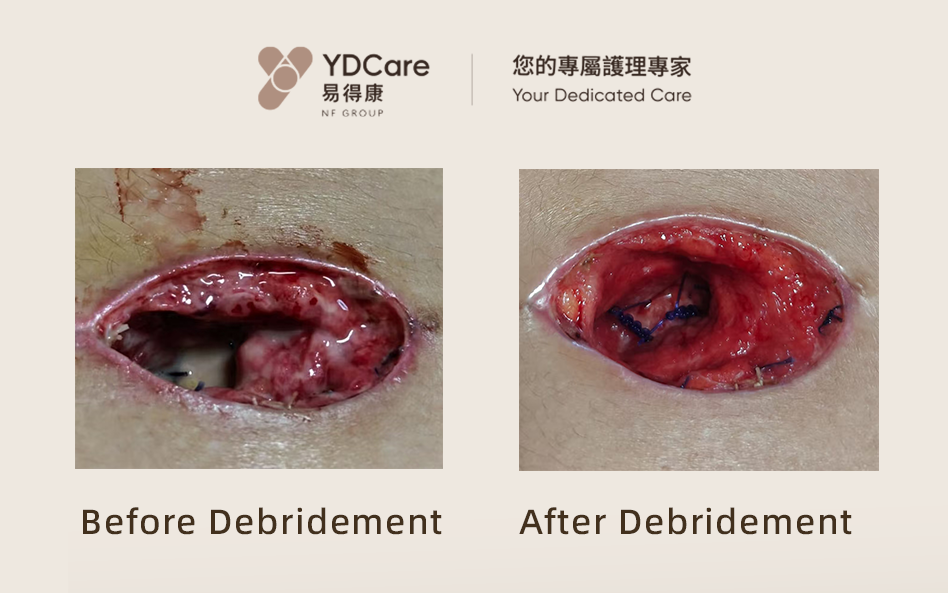
Visually, debridement
may make a wound look "larger and deeper";
however, medically speaking, it is actually making the wound "cleaner and healthier"!
Uncovering the
"Hidden Cavity" (The Iceberg Effect)
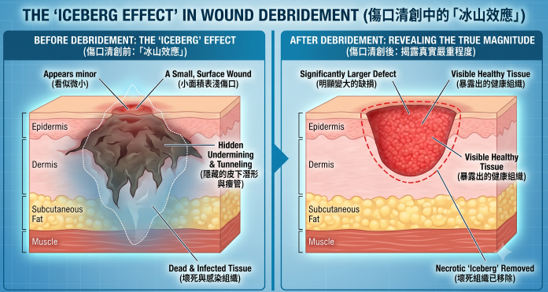
Many chronic wounds
(such as pressure injuries and diabetic foot ulcers) may appear superficially
as just a small wound. However, beneath the skin, the necrotic tissue may have
already spread outward like a tunnel. This is just like an iceberg that
tourists see floating on the lake's surface—no one knows how large it truly is
or what its structure looks like beneath the water.
The Necessity of
Debridement: Healthcare professionals must cut open that non-functional
layer of skin on the surface to clear away the hidden, rotten tissue underneath
and drain any pus, thereby cleansing the wound effectively.
"Making wound
larger" is for "True Healing"
If debridement is avoided out of fear that the wound will become larger,
the wound surface may appear to remain unchanged. In fact, however, the
underlying necrosis and infection will continue to spread into deeper muscles
and bones (developing into osteomyelitis). When that happens, even more tissue
will need to be excised, and it may even trigger systemic sepsis.
When observing a wound, one must look not only at its "size"
but, more importantly, at its "color":
- Even if a wound
is tiny, if it is filled with black dry eschar, yellow slough, or
foul-smelling discharge, debridement is an effective treatment option.
- After
debridement, the wound may look larger and deeper, but the color of the
granulation tissue will turn bright red and begin to have healthy blood
circulation, allowing the wound repair process to restart and move toward
healing.
The enlargement of a wound caused by debridement is actually a vital
process in wound healing. Only by demolishing the unsafe building and
thoroughly clearing away the debris can a tall building be constructed on a
healthy and solid foundation. Only then will the human body have the space to
grow new collagen and granulation tissue, allowing the wound to truly
transition from deep to shallow, and from large to small, resulting in
successful healing. YDCare’s Wound Nurse Specialists hold internationally
recognized qualifications and possess extensive experience in performing wound debridements
and managing various complex, difficult-to-heal wounds. If you face any
difficulties with wound care, please contact us immediately for inquiries.
Read more:
Post-Debridement Wound Care for Faster Healing
A Comprehensive Guide to Chronic Wound Care: Causes, Risks, and Home Management