After surgery for an abscess on his
buttock, Mr. Lau needed continuing wound care. He had private medical
insurance, so his insurance agent arranged a nurse to come to his home for
wound cleansing. The nurse was following the hospital's post-operative care
instructions.
That daily care never stopped. Yet five
months after the operation, the wound still had not fully healed.
At a follow-up appointment, his surgeon
suggested trying Negative Pressure Wound Therapy (NPWT). That prompted Mr. Lau
to reconsider: if the wound was making no progress, maybe what he needed was
not more cleaning — but a change of direction.
From a standard care plan to treating
the wound
Knowing that YDCare had extensive
experience with NPWT, Mr. Lau arranged for a wound nurse specialist to make an
assessment.
After going through his surgical history,
the care he had received so far, and his surgeon's recommendation, YDCare’s
nurse specialist completed a comprehensive wound assessment on the first visit
and started Smith and Nephew RenasysTouch Negative Pressure Wound Therapy (NPWT).
NPWT uses continuous, controlled negative
pressure to help management of wound exudate and maintain a more favourable
wound environment, supporting the body's healing process.
Learn more: Why Negative Pressure WoundTherapy (NPWT) Can Accelerate Wound Healing
Wound still sloughy, NPWT alone wasn't
enough
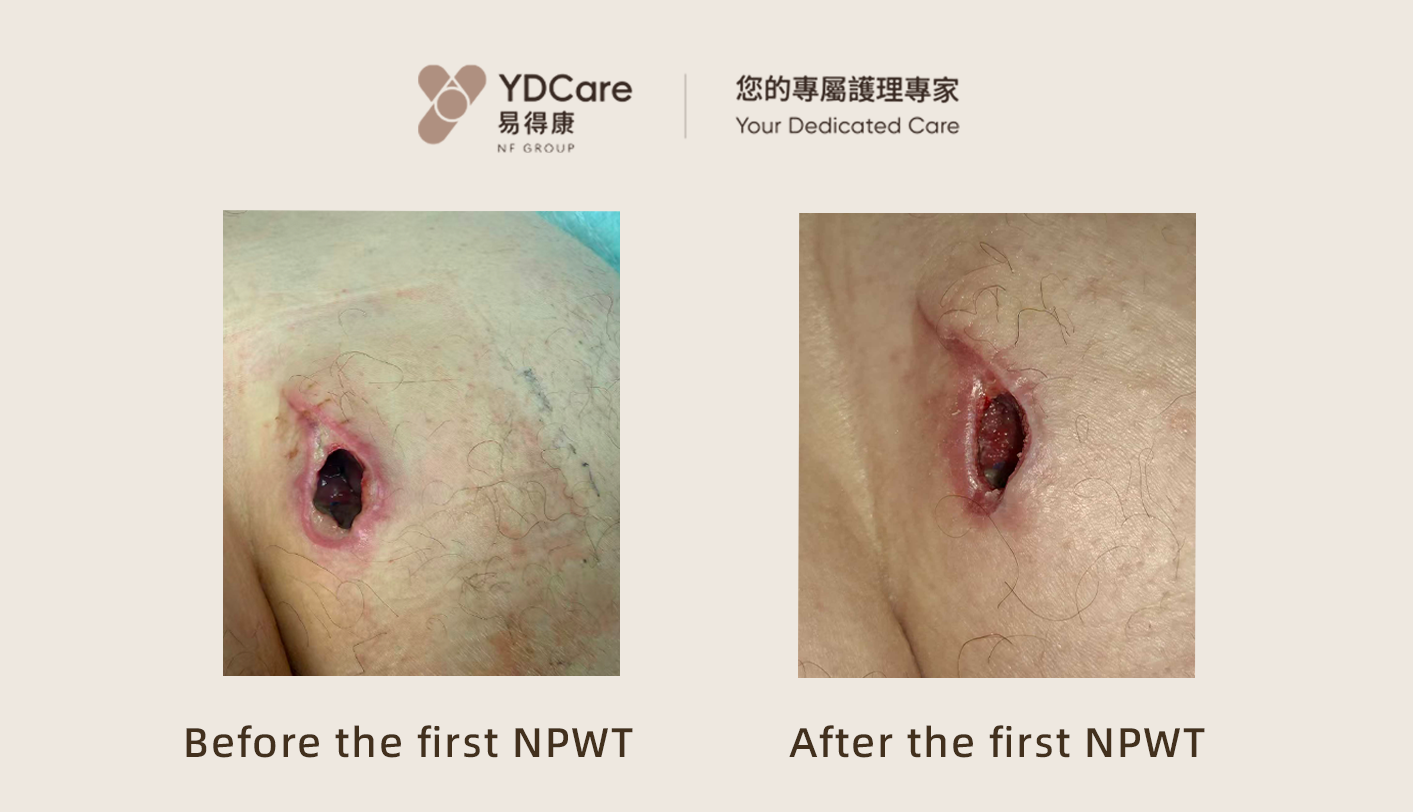
During the first few sessions, the wound specialist
could still see significant slough in the wound. Slough covers the wound bed,
making it harder to judge what is really going on underneath, and it can hold
back healing.
That meant simply connecting the negative
pressure pump was not enough. The wound specialist also treated the slough
directly, using Conservative Sharp Wound Debridement to remove unhealthy tissue
step by step, and applying an enzymatic ointment to some areas to help break
down and clear any remaining slough.
Learn more: A Guide to 5 DebridementMethods and How They Heal Wounds
Care starts with understanding what the
wound needs right now, and then deciding what to add.
Stepping down the treatment as the wound
closed
As the slough cleared, the wound bed came
into view. The was getting smaller, and the depth that had been there at the
start was slowly filling in.
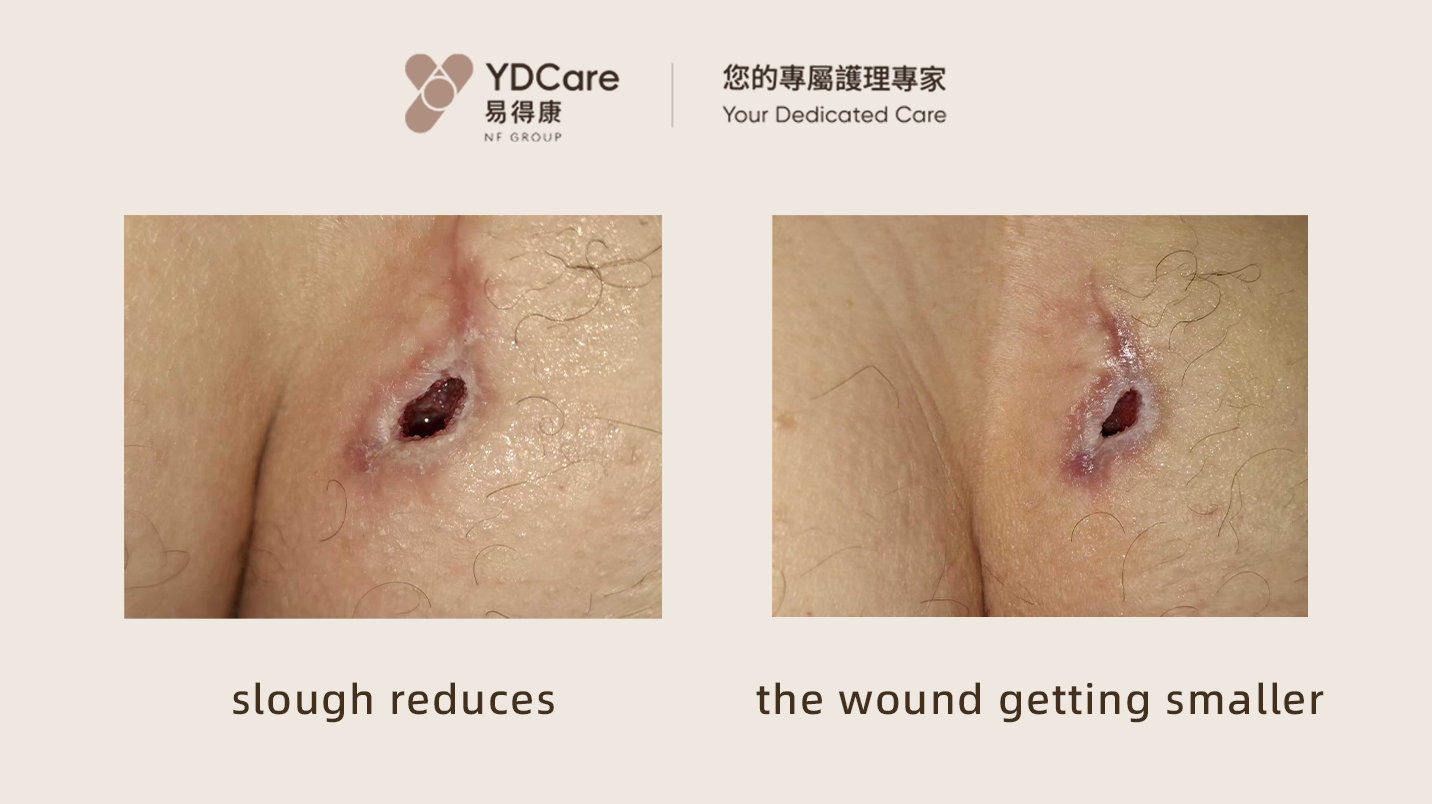
To the patient, it may look like nothing
more than "the wound is smaller and shallower". To a wound nurse
specialist, those changes also mean the wound has moved into a new phase — and
the priorities need to move with it.
While the wound was still deep and needed
fuller negative pressure therapy, Mr. Lau used a conventional NPWT system. But
as the wound shrank and shallowed and healing entered its later stage, the wound
specialist asked a different question:
How to facilitate him to go working with
NPWT ?
So, for roughly the final ten days, the wound
specialist switched him from the conventional system to the more portable PICO negative pressure system.
PICO is much smaller, which made it easier
for Mr. Lau to go out and carry on working while being treated, and reduced the
impact of treatment on his everyday life. The most powerful device is not
always the right one — what matters is choosing the therapy that suits the
wound at this stage, and the life the patient is living.
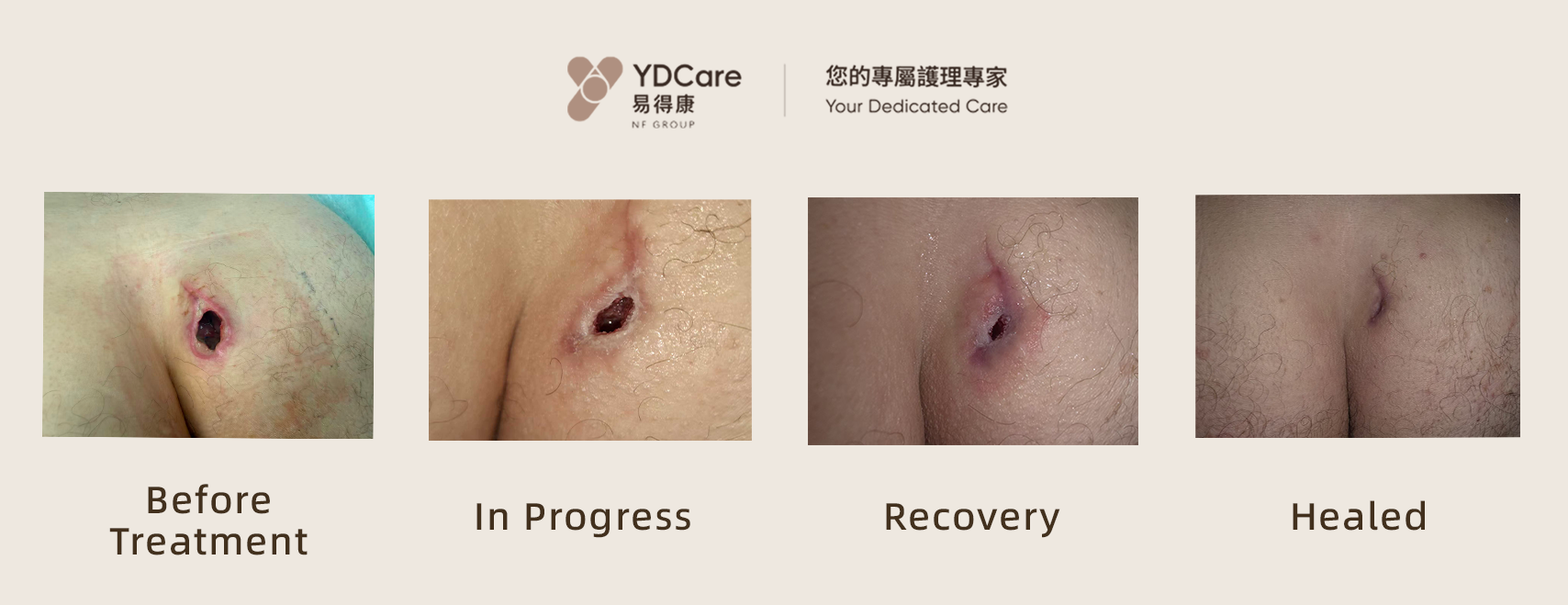
With consistent care and adjustments along
the way, the wound finally healed — after nine home visits by the specialist
nurse.
The value of a Wound Nurse Specialist
Every nurse can carry out basic wound
cleaning.
But when a wound is not healing as
expected, the role of a wound nurse specialist is not simply to keep following
the original instructions. It is to keep watching how the wound changes, and to
judge:
- - What state is the wound in right now?
- - Is there tissue that needs debridement?
- - Are the current dressing and treatment still appropriate?
- - Is it time to start or switch alternative wound care therapy,
e.g. negative pressure wound therapy?
- - Now that the wound is improving, can the intensity of treatment
be stepped down?
- - How should the next phase fit around the patient's daily life?
Mr. Lau's care journey — from wound
assessment, debridement and NPWT, to switching to PICO later on — was
adjusted step by step as his wound changed.
Wound care is not just about washing a
wound clean, and it is not about sticking with one treatment from start to
finish.
What matters more is being able to read the
changes in a wound, knowing what it needs now, and changing course at the right
moment. That is the real professional value of a wound nurse specialist.
Your insurance may cover Home Care
Mr. Lau had medical insurance, and after
his surgery his insurance agent arranged a nurse to care for the wound at home.
But having cover does not mean you are limited to the arrangement your insurer
put in place.
When wound care needs to change,
patients can still choose the home care and specialist nursing service that
fits their actual needs.
YDCare can support insurance claims by
providing service receipts and the relevant documentation, so patients can file
a claim with their insurer in line with their policy cover.
Policies differ in how they cover home
nursing, wound care and NPWT. Actual eligibility and the amount reimbursed
depend on the terms of your individual policy and on your insurer's assessment.
Learn more: Medical Insurance Support
If you or a family member are living with a
wound that isn't healing, contact YDCare to find out more about our wound care
specialist nurses and home wound care service.