Not all wounds need debridement
by YDCare Homecare Team
|
August 6,2026
Not every wound requires immediate debridement. Some wounds,
especially those with poor blood circulation and coagulation or
stable dry eschar, may need a different approach. A healthcare professional
should assess the wound before deciding whether debridement is appropriate.
Can debridement be done at home?
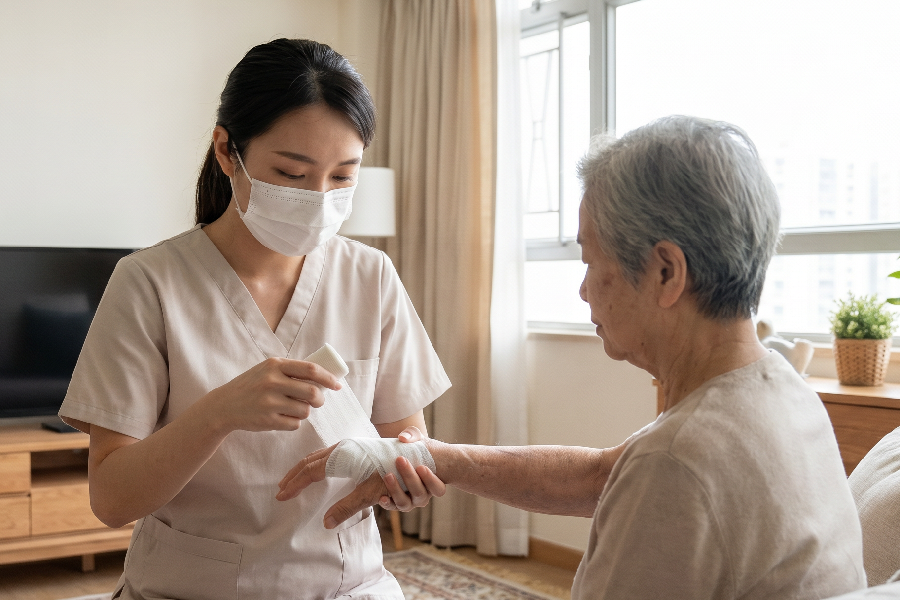
Debridement does not always involve surgery. Depending on the wound,
different methods may be used, including advanced dressings or professional
removal of non-viable tissue.
However, family members should not attempt to cut, scrape, or remove
dead tissue themselves. Improper debridement can damage healthy tissue,
increase infection risk, and make the wound worse. Professional assessment is
important to determine the safest treatment approach.
What should families watch for?
After debridement, ongoing wound care
remains essential. Families should monitor for:
- - Increasing redness or swelling
- - More drainage than usual
- - Strong odour
- - Increasing pain
- - Changes in the surrounding skin
- - Fever or signs of infection
It is also important to continue managing factors that affect
healing, such as pressure relief, blood sugar control, nutrition, and mobility
when appropriate.
When should you seek professional help?
If the wound becomes larger, deeper, more painful, develops pus, or
shows signs of infection, professional review should not be delayed. Early
intervention can help prevent complications and support better healing
outcomes.
The key message is simple: if a wound is not healing despite regular
care, dressing changes alone may not be enough. Debridement can play an
important role in wound healing, but it should always be assessed and performed
by qualified healthcare professionals.
At YDCare, our wound care team provides comprehensive wound
assessment, advanced dressing selection, and guidance on whether debridement
may be appropriate as part of a personalised care plan. If you are concerned
about a difficult-to-heal wound or would like expert advice on wound management
at home, contact YDCare to learn how we can support you and your loved ones on
the journey to better healing.
Read more about Wound Care:
Why Negative Pressure Wound Therapy (NPWT) Can Accelerate Wound Healing
A Guide to 5 Debridement Methods and How They Heal Wounds