Two Years of Recurring Wounds. Four Visits That Finally Made a Difference.
by YDCare Homecare Team
|
September 11,2026
Mrs Chan had already been living with a leg
ulcer for two years.
She had been diagnosed with spider veins
accompanied by a venous leg ulcer, and over the years, her family had tried one
treatment after another — from basic wound cleaning and skin grafting to
negative pressure wound therapy and compression stockings.
Yet the wound was persistent here.
For her family, the hardest part was not
simply caring for the wound. It was watching it improve at times, only to
deteriorate again, with no clear end in sight.
It was through a doctor's referral that the
family was introduced to YDCare's home wound care service.
A wound that needed a fresh assessment
When YDCare’s wound nurse specialist first
assessed Mrs Chan, the focus was on understanding the condition of the wound
and what had been tried before.
The wound required debridement to gradually
remove slough and non-viable tissue. Her wound care plan was then adjusted
based on its condition, following the principles of moist wound healing to
support a more suitable environment for wound repair.
Learn more about Wound Debridement
But there was another important part of the
plan: helping the family continue the care at home.
The family learned to manage the wound between visits
Because Mrs Chan's family was already able
to carry out basic wound care, there was no need for the nurse to visit every
few days.
Instead, the nurse specialist visited once
every 10 days for consultation, reassessment of the wound, sharp wound debridement
and adjustment of the care plan. The family continued with the day-to-day care
at home.
The nurse specialist also provided guidance
on areas that could affect wound recovery, including adequate protein intake
and proper use of compression stockings.
For the family, this meant they no longer
had to rely entirely on frequent professional visits. They had a clear
understanding of what to look out for and how to care for the wound between
visits.
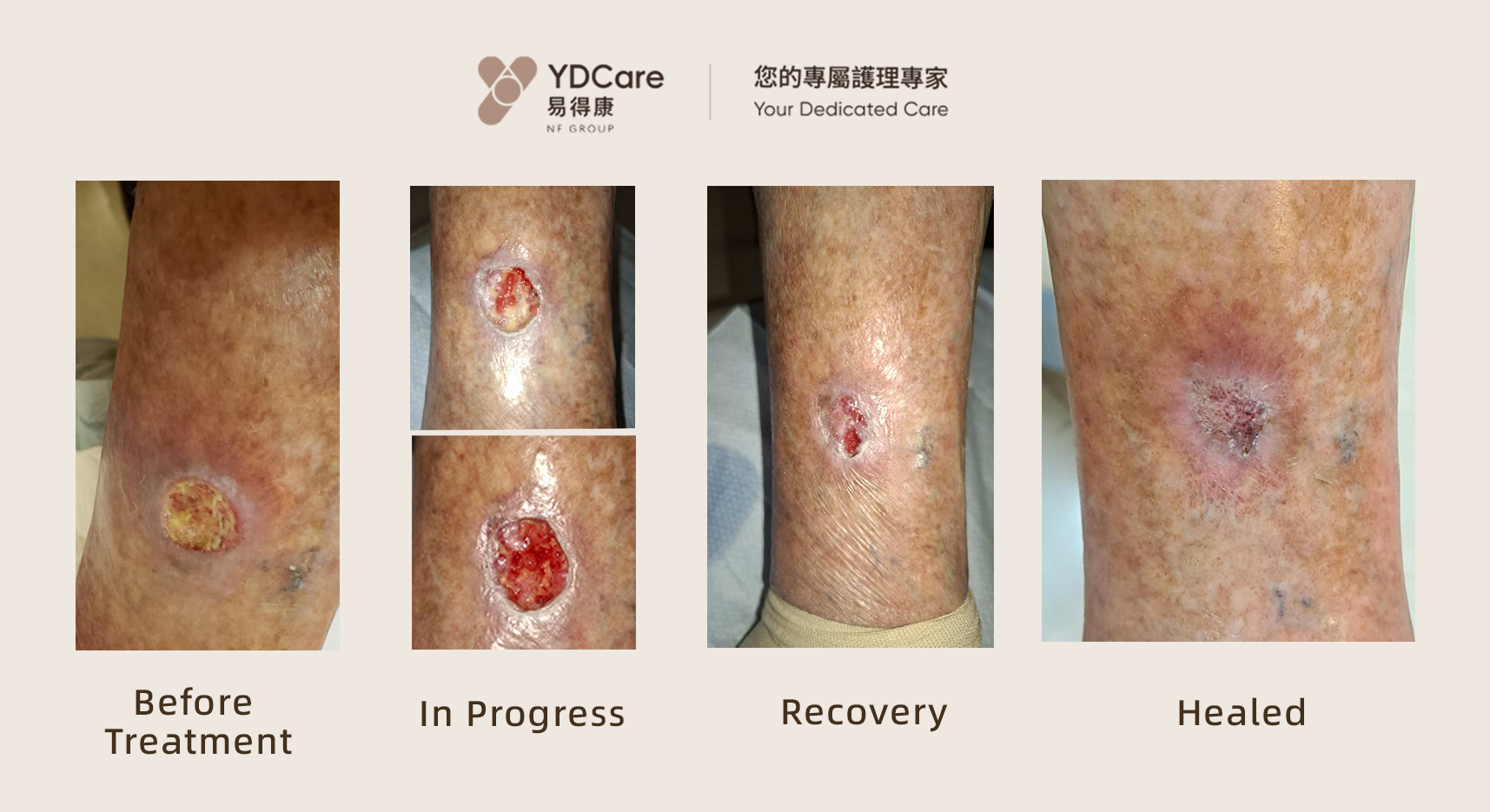
Two years of setbacks. Then, just four visits.
From the first home visit, our wound nurse
specialist only saw Mrs Chan four times.
Around two months, the wound had completely
healed.
For a wound that had been recurring for two
years, despite previous wound care, skin grafting, negative pressure therapy
and compression treatment, the progress came as a welcome surprise to the
family.
When the nurse specialist updated to the
surgeon on Mrs Chan's condition, the surgeon's responded surprisingly:
“The hospital nurses worked on it for six
months with no progress. Now it's done in two months! Really thank you for
taking care of my patient!”
After two years of dealing with a wound
that simply would not heal, Mrs Chan and her family finally had the outcome
they had been hoping for.
Every wound has a different story
A wound that keeps recurring or heals
slowly may need more than routine dressing changes. Understanding the wound,
reviewing previous treatment and adapting the care plan to the patient's needs
can all be important parts of wound management.
If you or your family member is dealing
with a wound that has been difficult to manage at home, YDCare's wound care
nurse specialists can assess the wound and provide appropriate home wound care
recommendations based on the individual's condition.
Read More:
A Comprehensive Guide to Chronic Wound Care: Causes, Risks, and Home Management
Why Negative Pressure Wound Therapy (NPWT) Can Accelerate Wound Healing