In her 50s, Ms Leung was living with diabetes and associated vascular complications when an accident injured the top of her right foot and big toe.
The wounds subsequently became infected, requiring a four-month hospital stay.
During her hospitalization, Ms Leung underwent several surgeries. Eventually, her big toe had to be amputated. The wound on the top of her foot also required extensive surgical debridement. Because the wound was deep with tendon exposure, she received negative pressure wound therapy (NPWT) after surgery.
Once her overall condition had been stabilized and her blood sugar was under control, her doctor decided that she was ready to return home.
But discharge did not mean the wound care was over.
The wounds still required ongoing care, and neither Ms Leung nor her family felt confident to manage a deep wound of this complexity on their own. Following her doctor's referral, she began receiving home wound care from a YDCare wound nurse specialist.
When the first approach was not enough
At the start of home care, the wound on the top of Ms Leung's foot was still deep.
The wound nurse specialist initially followed the discharge advice by using advanced dressings to maintain a moist wound environment and monitored how the wound responded. However, the progress was not as expected, particularly around the exposed tendon.
Rather than simply continuing with the same treatment, the wound nurse specialist reassessed the wound and discussed the situation with the surgeon. They decided to resume negative pressure wound therapy. The dressing was changed every five to seven days. After around three weeks, the wound had obviously reduced in size, and NPWT could be discontinued.
The treatment did not stay the same from beginning to end. As the wound changed, so did the approach.
With the wound entering a new stage of healing, the nurse specialist switched to advanced dressings, including collagen wound products and hydrofiber dressings, to support further epithelialization and promote healing.
Two wounds, two different paths to healing
Ms Leung was actually facing with two wounds on the same foot. The deeper wound on the top of her foot required NPWT before transitioning to advanced dressings. The other wound was managed differently, using sterile wound-closure strips to bring the wound edges together.
And the two wounds did not heal at the same pace.
The second wound had completely healed after around six weeks of care, while the deeper foot wound continued to require attention.
Rather than following one fixed treatment plan for both wounds, the care was adjusted according to how each wound responded.
One wound healed and moved on. The other needed more time.
This meant that as the wounds changed, the focus of care changed with them.
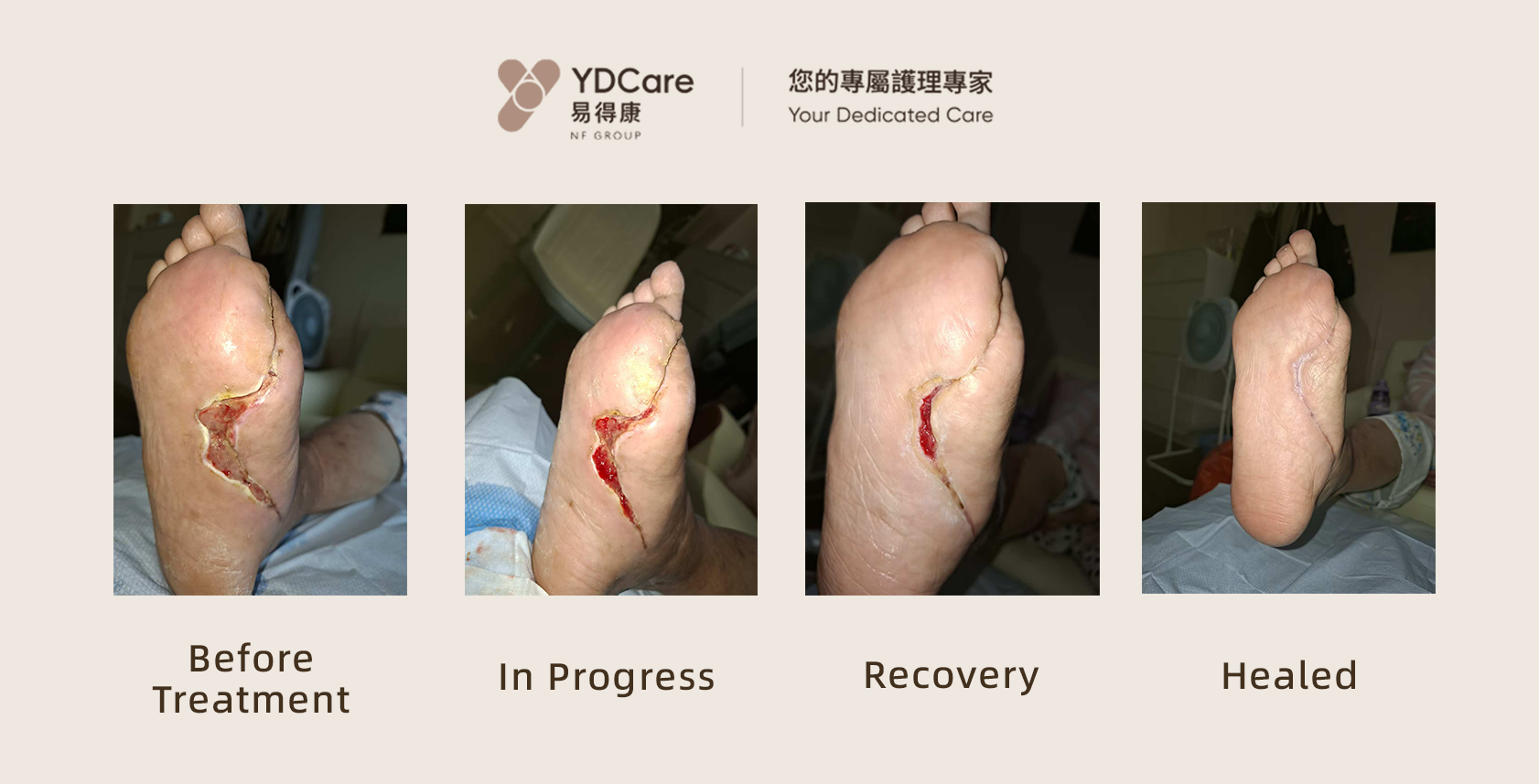
As the wounds improved, the nurse stepped back
In the early stage, Ms Leung needed frequent home visits to manage the deeper wound. As the wounds became more stable, the family gradually became more involved in the day-to-day wound care. Around the middle of the three-month period, they began taking over routine care at home, while the wound nurse specialist continued to visit about once a week to review the wounds and advise on dressings and ongoing care.
By the third month, the wounds had become much more stable.
Frequent home visits were no longer necessary. The family could send photos of the wounds for routine follow-up, with the nurse specialist providing guidance by phone. Two further home visits were arranged during this period so that the nurse specialist could reassess the wounds on site and adjust the care plan to make sure the dressings remained appropriate.
The goal was not to keep the nurse involved for as long as possible. It was to help Ms Leung and her family gradually return normal life.
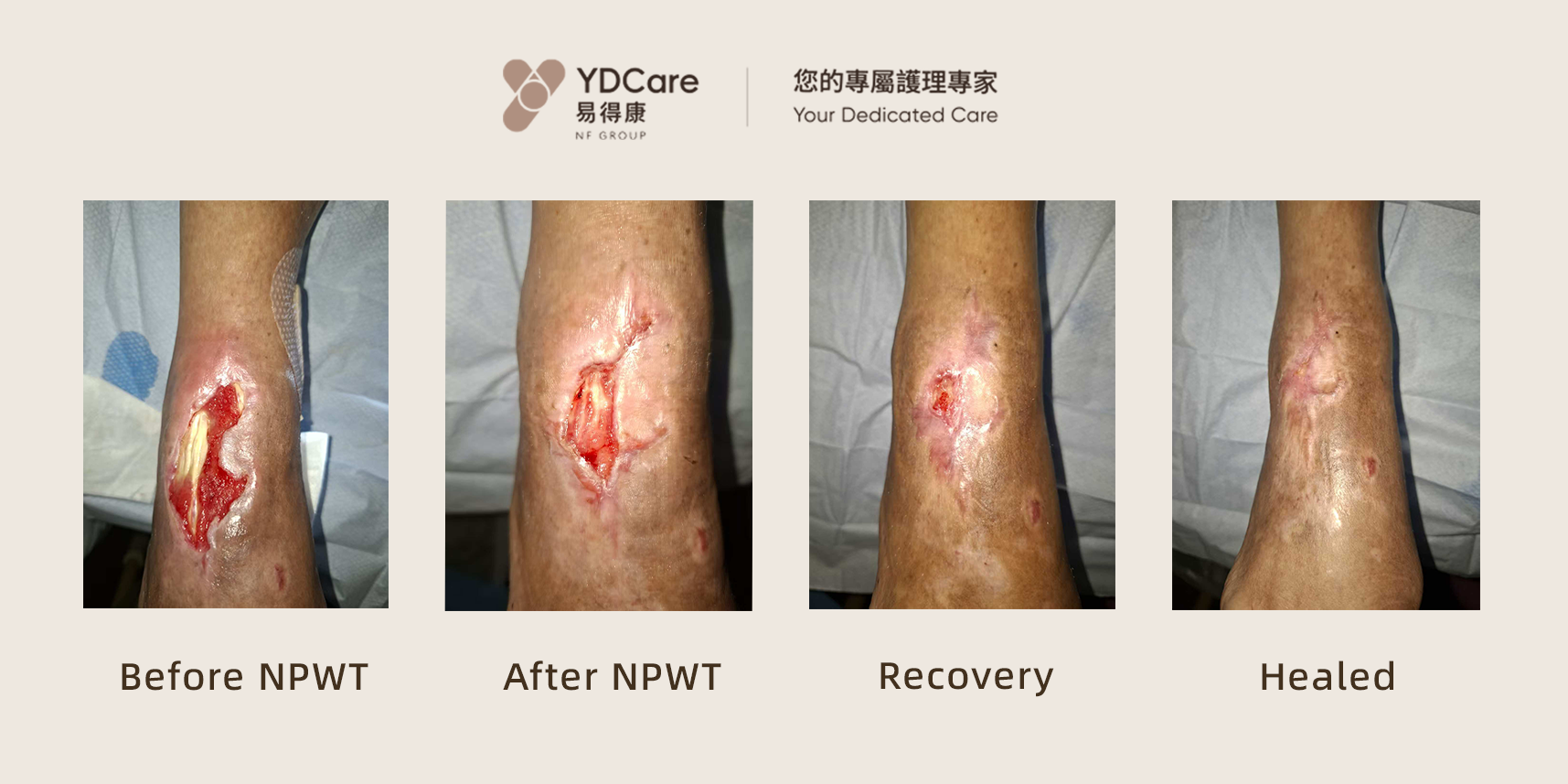
Three months later, she was ready to “graduate”
From her first home visit in late May to her final assessment in late August, Ms Leung went through almost three months of home wound care.
During that time, her care evolved with the wounds — from negative pressure therapy to advanced dressings, from regular nursing visits to family-led daily care, and eventually to photo and telephone follow-up with only occasional face-to-face assessments.
By the final visit, both wounds had completely healed. Ms Leung had officially “graduated” from wound care.
Wound healing is rarely a straight line. A wound may require different approaches at different stages — and the level of professional support may also change as the wound improves.
For patients returning home with deep, complex or slow-healing wounds, home wound care is not simply about having someone come in to change a dressing. It is about regular assessment, adapting care when needed, supporting the family in day-to-day management, and knowing when professional support can gradually be reduced.
If you or a family member is returning home with a wound that is difficult to manage, YDCare's wound nurse specialists can assess the wound and recommend an appropriate home wound care plan based on its co
Read More:
A Guide to 5 Debridement Methods and How They Heal Wounds
Bilateral Heel Pressure Injuries Recovery Case: Wound Care & Debridement Treatment
Home Negative Pressure Wound Therapy (NPWT) for a Stage 4 Pressure Injury (Sacral Area)